
Short answer: in our example (a commercial van doing 25,000 km a year), the diesel van's fuel produces about 24.2 kg CO2e per 100 km, using our diesel factor of 2.687 kg CO2e per litre, built from the National Environment Agency's GHG Measurement & Reporting Guidelines. The electric van's charging produces about 8.0 kg CO2 per 100 km, using Singapore's 2024 grid emission factor of 0.402 kg CO2 per kWh from the Energy Market Authority. On these numbers, the electric van's running emissions are roughly a third of the diesel van's.
Two vans, two scopes
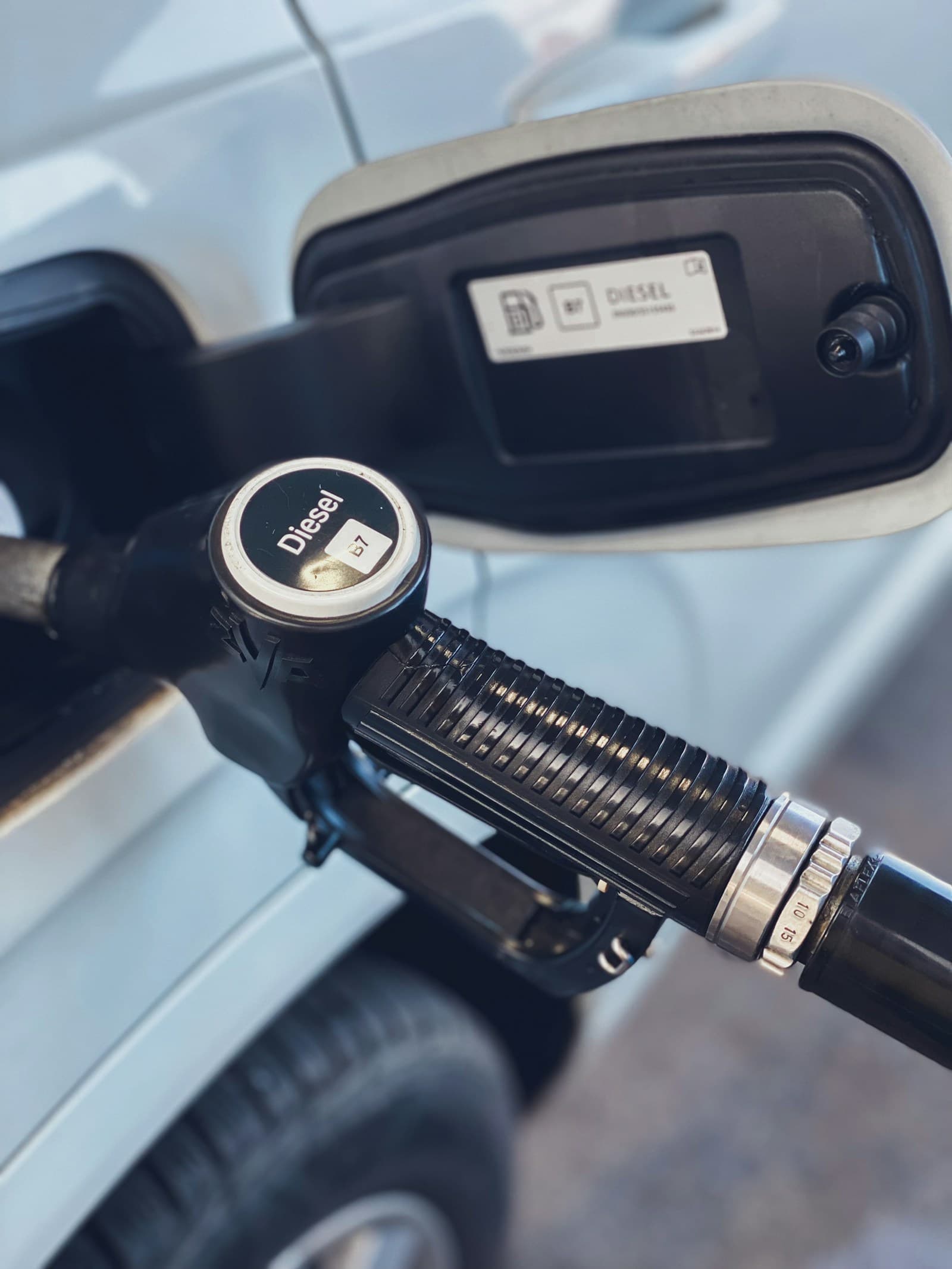
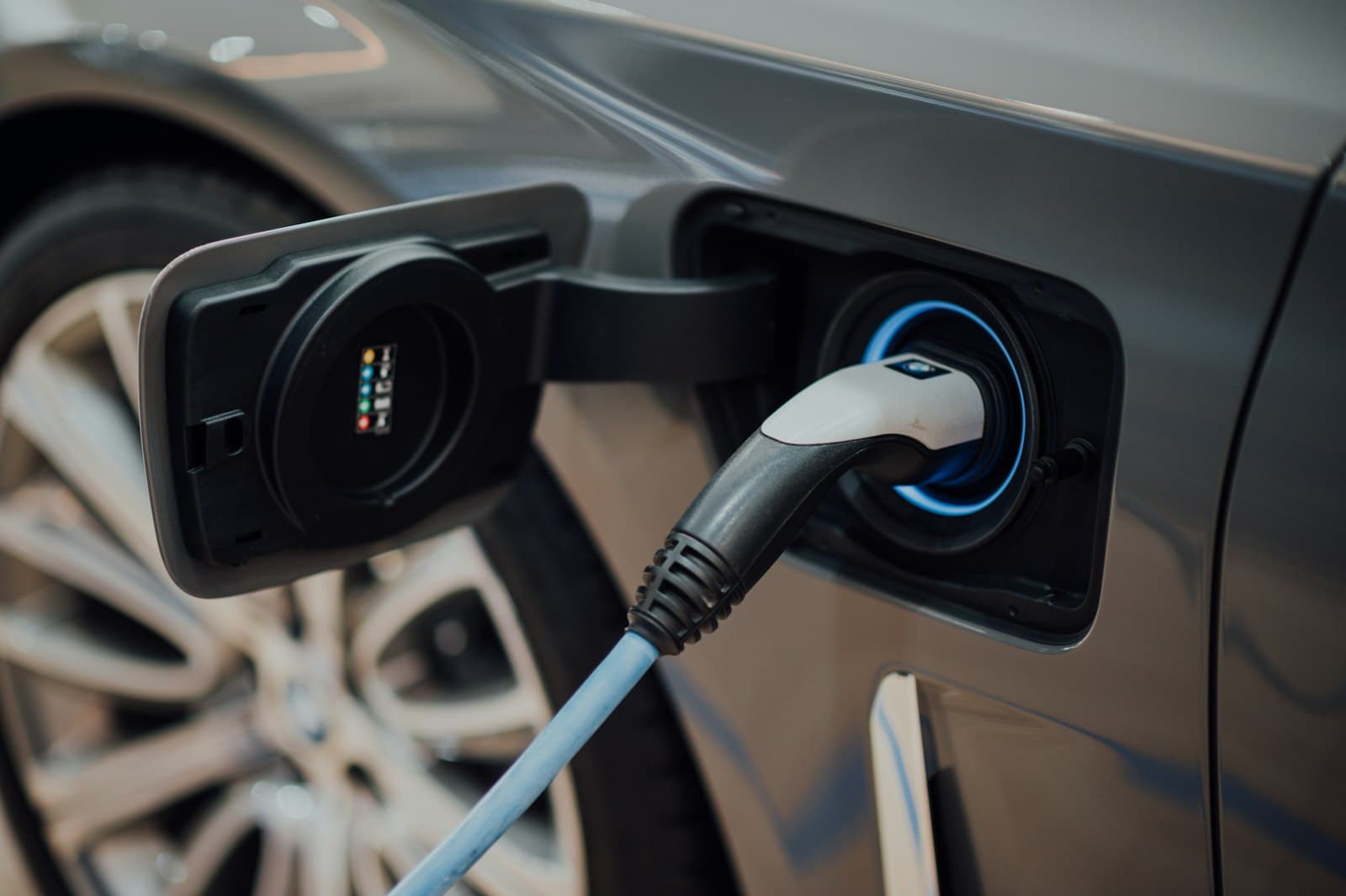
The diesel van burns fuel in its own engine, so its emissions are Scope 1. The electric van has no tailpipe. Its emissions happen at the power stations that make the electricity you buy to charge it, so they are Scope 2.
The two results carry different labels. The diesel factor includes small amounts of methane and nitrous oxide, so it is in CO2e. Singapore's grid factor covers CO2 only, so the electric result is in CO2. The factors themselves are explained in CO2 per litre of diesel and petrol for company vehicles and Singapore's grid emission factor for 2024.
A worked example
These are example inputs, not a real company's data or a real vehicle's rating.
- Distance: 25,000 km a year
- Diesel van: 9 litres per 100 km
- Electric van: 20 kWh per 100 km
| Diesel van | Electric van | |
|---|---|---|
| Scope | Scope 1 (fuel burned) | Scope 2 (electricity bought) |
| Used per year | 2,250 litres | 5,000 kWh |
| Factor | 2.687 kg CO2e per litre | 0.402 kg CO2 per kWh |
| Per 100 km | 24.18 kg CO2e | 8.04 kg CO2 |
| Per km | about 0.242 kg CO2e | about 0.080 kg CO2 |
| Per year | 6,045.75 kg CO2e (about 6.05 tonnes) | 2,010.00 kg CO2 (about 2.01 tonnes) |
The working:
- Diesel: 25,000 km × 9 ÷ 100 = 2,250 litres. 2,250 × 2.687 = 6,045.75 kg CO2e
- Electric: 25,000 km × 20 ÷ 100 = 5,000 kWh. 5,000 × 0.402 = 2,010.00 kg CO2
In this example, running the electric van instead of the diesel van means about 4 tonnes less a year. Your own figure depends on your distance, your vehicles and your routes.
Use your own numbers
If you're estimating before you buy:
- Diesel: km per year × litres per 100 km ÷ 100 × 2.687 = kg CO2e
- Electric: km per year × kWh per 100 km ÷ 100 × 0.402 = kg CO2
For your actual report, don't estimate from kilometres. Use the litres on your fuel records and the kWh on your charging records, then multiply by the same factors.
What this comparison doesn't cover
These are running emissions only. They leave out:
- Making the vehicles, including the electric van's battery.
- Producing and delivering the energy before it reaches you: extracting, refining and shipping diesel, or producing and delivering the fuel that power stations burn. Our factors cover burning the fuel only, on the road or at the power station.
- Changes in the grid factor. It changes from year to year (EMA's figure was 0.412 for 2023 and 0.402 for 2024). Every Uncle ESG report uses 0.402, EMA's latest published figure, whatever year your bills are from, and cites it.
So this is a fair way to compare what each van adds to your Scope 1 and 2 report. It isn't a full life-cycle comparison.
Practical tips for reporting an electric van
- Report the kWh you paid for. Use the kWh on your charging records: depot meter readings, charging-operator invoices or charging-app statements. Don't use the figure on the van's dashboard. What you paid for is what you report.
- Company-paid charging is commonly treated as Scope 2, whether it's at your depot or at a public charger, because your company is buying the electricity. Guidance on some of these cases isn't fully settled. Choose an approach, apply it every year, and say which one you used.
- Staff charging at home, reimbursed by the company, is a boundary choice. Some companies count it in Scope 2 and others don't. Decide, be consistent and state it in your report. If your customer has a rule, follow it. Whichever you choose, you'll need the kWh. A dollar reimbursement on its own can't be turned into emissions reliably.
- Expect your scopes to shift. Swap a diesel van for an electric one and your Scope 1 goes down while your Scope 2 goes up. If your customer compares this year's numbers with last year's, add a one-line note explaining the change so it doesn't look like an error.
- Leased or hired vans follow the same boundary rules as fuel vehicles. See the diesel and petrol article.
LTA offers incentives for cleaner light commercial vehicles. Check LTA's site for current details before you buy.
If you'd rather not do it yourself
Uncle ESG does this for you. Send your fuel records, charging records and electricity bills, and a person compiles a GHG Protocol-aligned Scope 1 & 2 report, with every factor cited to its source.
- Standard: S$150, 5 business days.
- Priority: S$300, 48 hours, firm.
- Multi-Site: S$250 for the first site plus S$90 per additional site, 7–14 days.
Fixed price, paid upfront. Turnaround counts from a complete submission, once we have your full details and bills, not from the moment you pay. Get started.
Sources
- GHG Measurement & Reporting Guidelines, Appendix to Part II (Version 3), Table 3, National Environment Agency (basis of the diesel factor; full working on How we calculate).
- Singapore Energy Statistics 2025, Chapter 2 (Grid Emission Factor), Energy Market Authority.
- GHG Protocol Scope 2 Guidance, World Resources Institute and WBCSD.
- GHG Protocol Corporate Standard, World Resources Institute and WBCSD.
- CVES and ETS extended (news release, December 2024), Land Transport Authority.