
How we calculate
The method and numbers behind every report, with a link to where each number comes from.
Every Uncle ESG report is aligned with the GHG Protocol for Scope 1 and Scope 2 emissions. We use published government factors, we apply the same factors to every report, and each report is compiled and checked by a person, not generated automatically.
What's covered, and what isn't
- Scope 1: direct emissions from fuel your company burns: diesel and petrol in your own vehicles, and LPG burned in equipment on site.
- Scope 2: indirect emissions from the electricity you buy.
- Scope 3 is not covered. That's everything else in your value chain, such as suppliers, materials and business travel. If you supply data to a larger company, your Scope 1 and 2 figures feed into their Scope 3, which is usually what they're asking you for.
The numbers come from the bills you send us: litres of fuel, and kWh of electricity.
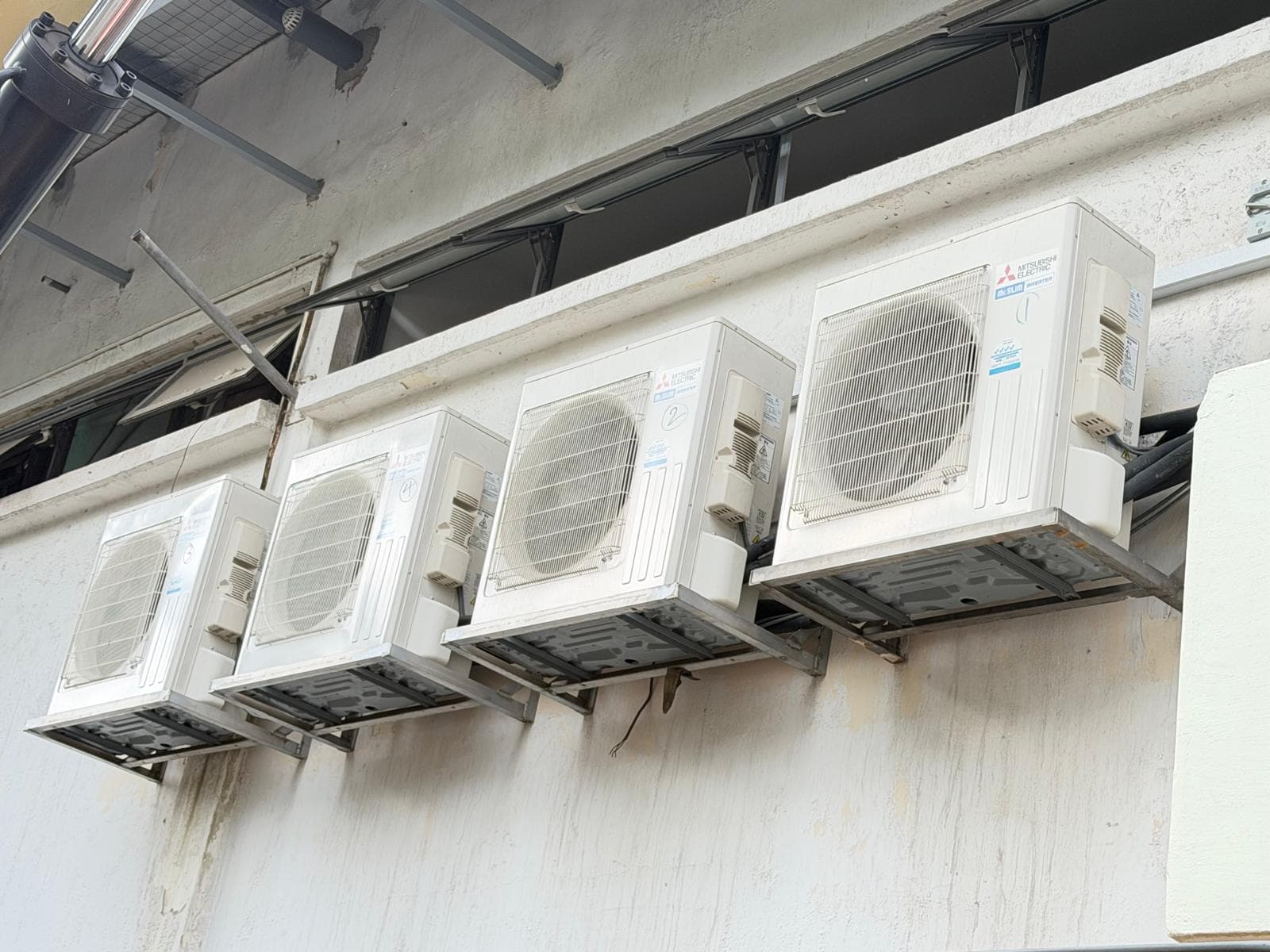
Scope 2: electricity
We multiply the kWh on your electricity bills by Singapore's grid emission factor of 0.402 kg CO2 per kWh. This is the 2024 figure, the latest published, from the Energy Market Authority's Singapore Energy Statistics 2025, Chapter 2.
- We use this same factor for every report, whatever year your bills are from, and we cite it in every report.
- It's a location-based figure: the average for Singapore's grid, not your particular electricity plan.
- It covers CO2 only, because that's what EMA publishes. EMA doesn't publish a CO2-equivalent grid factor.
- Singapore publishes no "residual mix" factor, so we only report a market-based Scope 2 figure if you give us your retailer contract or renewable energy certificates.

Scope 1: fuel
We multiply the litres on your fuel bills by these factors, in kg CO2e per litre:
| Fuel | Used in | kg CO2e / litre |
|---|---|---|
| Diesel | Vehicles | 2.687 |
| Petrol | Vehicles | 2.331 |
| LPG | Equipment on site | 1.583 |
Where these factors come from
- Energy content and CO2: Table 3 of the National Environment Agency's GHG Measurement & Reporting Guidelines (Appendix to Part II, Version 3). For example, diesel: 43 GJ per tonne and 74.1 kg CO2 per GJ.
- Methane (CH4) and nitrous oxide (N2O): for vehicles, from the 2006 IPCC Guidelines, Volume 2, Chapter 3, road transport (diesel: 3.9 kg CH4 and 3.9 kg N2O per TJ; light-duty petrol vehicles from 1995 on: 3.8 and 5.7). For LPG, which is burned in equipment, the NEA stationary values (0.001 kg CH4 and 0.0001 kg N2O per GJ).
- Converting CH4 and N2O to CO2e: the IPCC AR5 global warming potentials set in Singapore's Carbon Pricing Act 2018, First Schedule (CH4 = 28, N2O = 265).
- Litres to tonnes: NEA gives factors per tonne of fuel, but bills show litres. We use the published average densities from the UK DESNZ 2025 conversion factors: diesel 830.565, petrol 741.84 and LPG 529.749 kg per cubic metre. The GHG Protocol allows published default factors where no local data exists.
Assumptions we make
- All diesel and petrol is treated as 100% mineral fuel, with no biofuel blend. No official source gives Singapore's pump-fuel blend, and this is the conservative choice.
- Factors cover burning the fuel only, not producing or transporting it ("well-to-tank").
How this lines up with other references
- BCA Green Mark 2021. The Whole Life Carbon Technical Guide (R2) uses the same NEA diesel factor we start from. Its CO2-only equivalent is about 2.646 kg CO2 per litre; ours is 2.687 because the GHG Protocol asks for CO2e, so we add CH4 and N2O.
- UK DESNZ 2025. As a cross-check, the UK government's per-litre factors are diesel 2.662, petrol 2.340 and LPG 1.557 kg CO2e per litre, within about 1–2% of ours.
Who does the work
A person reads your bills, totals the litres and kWh, applies the factors above, and checks the result before the report is emailed to you. Nothing on this site calculates or generates the report automatically.
Ready to start? Apply for your report.
Sources
- Singapore Energy Statistics 2025, Chapter 2, Grid Emission Factor, Energy Market Authority.
- NEA GHG Measurement & Reporting Guidelines, Appendix to Part II, Version 3 (issued 15 Dec 2023, effective 1 Jan 2024), Table 3 (Tier 1 default fuel combustion factors, stationary), pp. 17-18, National Environment Agency.
- 2006 IPCC Guidelines, Vol 2, Ch 3, Table 3.2.2, p. 3.21.
- Carbon Pricing Act 2018, First Schedule, Singapore Attorney-General's Chambers (Singapore Statutes Online).
- UK DESNZ Greenhouse gas reporting: conversion factors 2025, Version 1 (Scope 1 > Fuels; densities from 'Fuel properties' sheet).
- BCA Green Mark 2021 Technical Guide: Whole Life Carbon, R2 (dated 2024-01-01), Building and Construction Authority.